Trump Imposes $100,000 Fee on H-1B Visas, Raising Concerns for Indian Tech Workers
 PakkaHyderabadi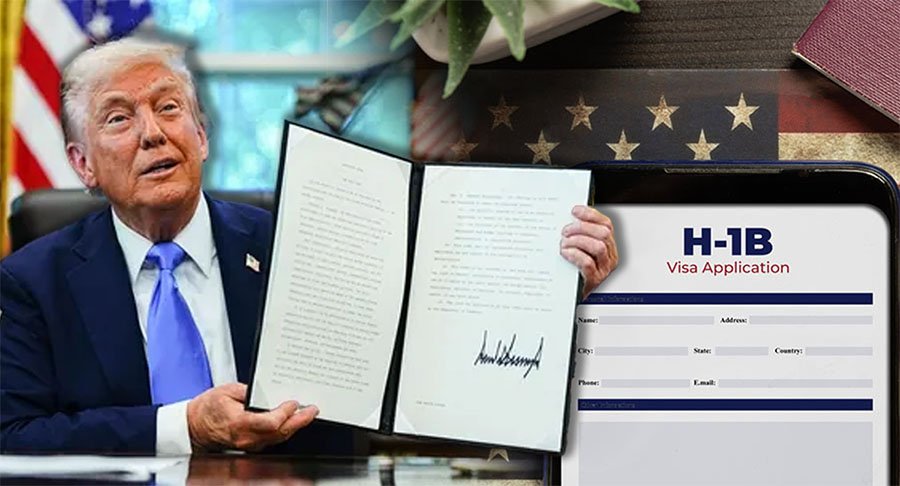
President Trump introduces new H-1B visa rules with a steep $100,000 fee per worker.
US President Donald Trump has announced a major policy shift on the H-1B visa programme, unveiling a steep fee of $100,000 per application for companies seeking to hire foreign workers. The proclamation, set to take effect from September 21 for a 12-month period, is being framed as an effort to protect American jobs and curb what Trump described as “systemic abuse” of the visa system.
Commerce Secretary officials said the move was designed to push companies toward prioritising local American talent instead of relying heavily on foreign workers. With Indians accounting for over 70% of all H-1B holders, the decision is expected to have a disproportionate impact on the Indian diaspora in the United States.
In his proclamation, Trump alleged that large IT outsourcing firms have exploited the programme to undercut wages, creating challenges for American college graduates. “The misuse of the H-1B program is a national security threat,” the president said, adding that the practice allows employers to hire foreign workers at a discount compared to American professionals.
Immigration experts believe the new rule could significantly affect the tech industry’s hiring practices. Sophie Alcorn, a California-based immigration lawyer, noted that while most Indian professionals may not be forced to leave immediately, the $100,000 fee could discourage employers from sponsoring renewals or job changes. This could reduce career mobility for H-1B workers and push many toward other destinations such as Canada, the UK, or the UAE.
Some H-1B holders, however, are adopting a wait-and-watch approach. One Indian technologist said the legality of the proclamation itself might be challenged in US courts. “It’s unclear if the proclamation has legal basis, so I fully expect this will face judicial review,” he remarked anonymously.
The H-1B programme, created in 1990, allows American firms to hire foreign workers with specialised skills, particularly in technology. Each year, 65,000 visas are granted, along with an additional 20,000 for candidates with advanced US degrees. Over the years, Indian technology professionals have consistently been the largest beneficiaries, reflecting the global demand for their expertise.
Despite Trump calling it a “great programme,” divisions remain even within his administration and party. Critics like Vice President JD Vance and conservative voices such as Steve Bannon argue that the visas displace American workers, especially during times of mass layoffs. Others, including USCIS director Joseph Edlow, stress that the H-1B should “supplement, not supplant” the US workforce. With the $100,000 visa fee, the debate over immigration, jobs, and the future of the American workforce is only set to intensify.