
India Wildfires 2024–25: 15 Million Affected, Uttar Pradesh Worst Hit, Study Warns
 PakkaHyderabadi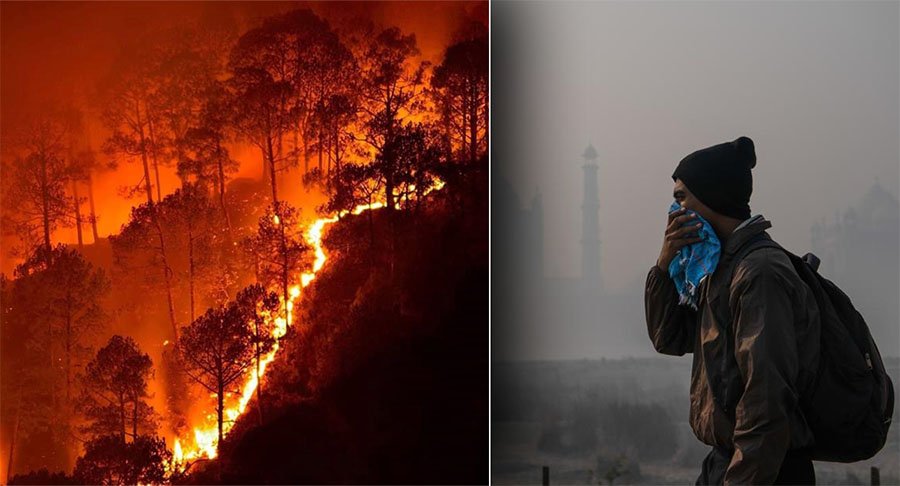
Satellite data shows record wildfire activity across Uttar Pradesh in 2024–25, worsening air quality in Delhi.
15 Million People in India Affected by Wildfires in 2024–25, Uttar Pradesh Worst Hit: Global Study
A new global study has revealed that nearly 15 million people in India were exposed to wildfire pollution and its health impacts during 2024–25, marking one of the most severe seasons in recent history. The data comes from the State of Wildfires 2025 report, published in the journal Earth System Science Data, which warned that India is emerging as a major wildfire hotspot in South Asia.
The report highlights that Uttar Pradesh (UP) experienced the most intense wildfire season ever recorded in the state. A deadly combination of crop residue burning, prolonged heatwaves, and dry vegetation triggered uncontrollable fires across districts like Sitapur, Bahraich, Pilibhit, Lakhimpur Kheri, and Shahjahanpur.
These fires did not just destroy land—they also choked northern India under a toxic haze. In November 2024, wildfires from UP and neighbouring Punjab contributed to severe smog episodes in New Delhi, where PM2.5 pollution levels crossed 200 µg/m³ — 13 times higher than the WHO safe limit.
Researchers noted that the scale and frequency of recent fires point to a dangerous shift in India’s climate patterns. “This is no longer a local agricultural issue. Wildfires in UP are now a public health emergency,” said the report’s co-author, Dr. Elisa Portman.
Satellite data from NASA’s Fire Information System (FIRMS) showed a significant rise in fire events between October 2024 and February 2025, especially in rural belts where farmers burn stubble to clear fields for the Rabi crop. Experts warn that climate change has extended the fire season and increased fuel dryness, making fires harder to control.
Wildfire smoke contains high levels of particulate matter (PM2.5), carbon monoxide, benzene, and formaldehyde, which can remain in the atmosphere for days and travel hundreds of kilometres. According to public health data, wildfire exposure sharply increases the risk of lung infections, heart attacks, throat irritation, and asthma attacks, especially among children and the elderly.
“Nearly 40% more people reported respiratory illness in UP and Delhi during last year’s wildfire season,” said pulmonologist Dr. Arvind Kumar from Medanta Hospital. He also warned that long-term exposure to wildfire smoke can even increase the risk of lung cancer.
Despite its rising threat, India has no national wildfire prevention policy. The report criticised weak enforcement of farm fire bans and insufficient investments in early warning systems, suggesting that local communities need access to fire-safe farming alternatives like crop residue management machines and biofuel plants.
The study concludes with a warning: without urgent government intervention and climate adaptation measures, wildfire-linked health disasters in India could become an annual crisis.