Telangana Issues ‘Stop Use’ Alert on Coldrif Cough Syrup After Child Deaths in MP and Rajasthan
 PakkaHyderabadi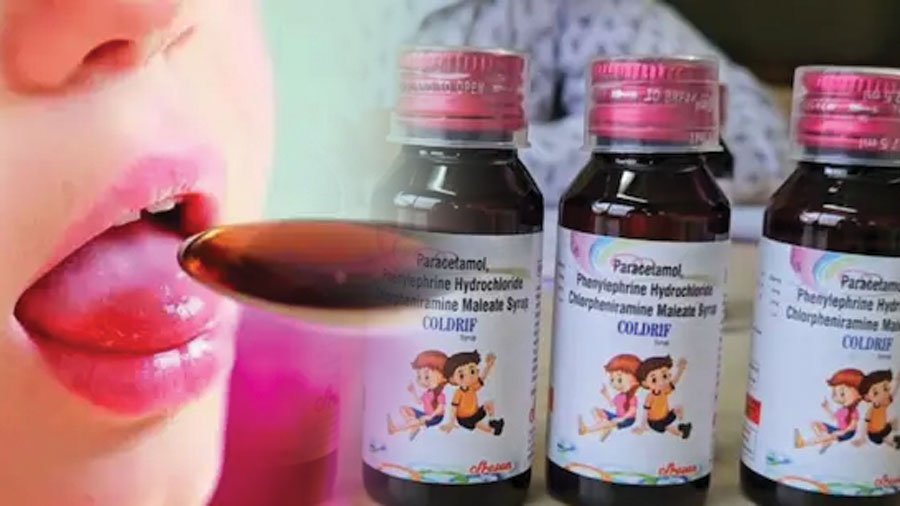
Telangana Drugs Control Administration issues ‘stop use’ alert on Coldrif cough syrup following reports of child deaths in Madhya Pradesh and Rajasthan.
The Telangana Drugs Control Administration (DCA) on Saturday issued a public alert and ‘stop use notice’ for Coldrif cough syrup after reports emerged linking the medicine to the deaths of several children in Madhya Pradesh and Rajasthan.
In its official release, the DCA said it was “alerted” by media and inter-state communications about the tragic deaths of children allegedly caused by the consumption of the syrup. The alert specifically concerns Batch No. SR-13, which authorities say has been adulterated with Diethylene Glycol (DEG) — a toxic chemical known to cause kidney and liver damage.
The Telangana DCA warned all pharmacies, hospitals, and the general public to immediately stop the sale and use of the product and report any remaining stock. Officials added that strict surveillance and sampling are underway to ensure that the contaminated batch is removed from circulation.
Madhya Pradesh Bans Coldrif Syrup After Child Deaths
The Madhya Pradesh government on Saturday banned the sale of Coldrif syrup following the deaths of at least nine children in Chhindwara district since September 7. The deaths were reportedly due to severe kidney infections suspected to have been caused by the consumption of the syrup.
Investigations by the Tamil Nadu Drug Control Authority revealed that Coldrif syrup (Batch No. SR-13; Mfg: May 2025; Exp: April 2027), manufactured by Sresan Pharmaceuticals, Kancheepuram, contained 48.6% Diethylene Glycol (DEG) — a highly poisonous solvent that can cause acute renal failure and death even in small doses.
Meanwhile, the Central Drugs Standard Control Organisation (CDSCO) has launched a risk-based inspection of 19 pharmaceutical manufacturing units across six states. The probe team includes experts from the National Institute of Virology (NIV), ICMR, NEERI, and AIIMS-Nagpur, who are analysing syrup and biological samples to pinpoint the cause of deaths.