Government Bans 16 Medicines Across India Following Supreme Court Directive
 PakkaHyderabadi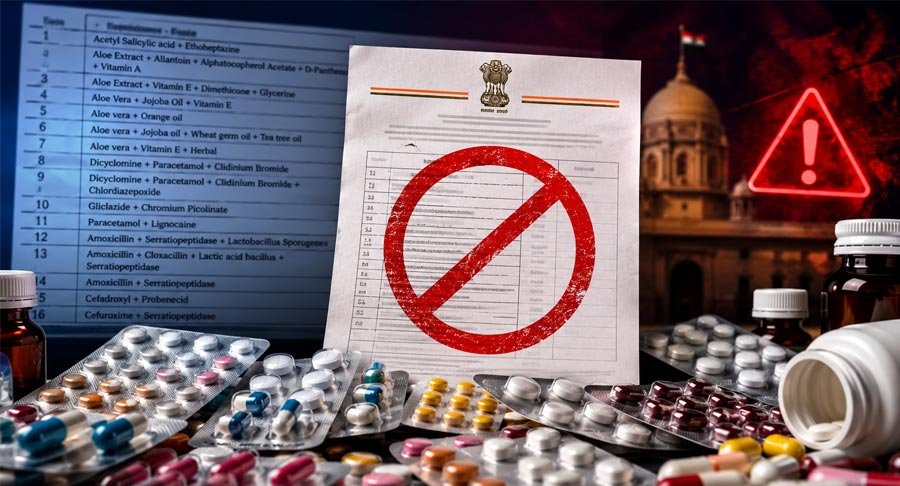
Government Bans 16 Medicines Across India
Health Ministry prohibits 16 Fixed Dose Combination drugs nationwide after expert panels flag safety concerns and lack of therapeutic justification.
New Delhi: The Union Ministry of Health and Family Welfare has imposed an immediate nationwide ban on 16 Fixed Dose Combination (FDC) medicines after an extensive scientific review and directions arising from Supreme Court proceedings. The decision prohibits the manufacture, sale and distribution of these medicines across the country.
According to the ministry, expert committees examined the safety, efficacy and therapeutic value of the drug combinations and concluded that they lacked sufficient medical justification. Authorities stated that the potential risks associated with these medicines outweighed their claimed benefits, making regulatory intervention necessary.
- Acetyl Salicylic Acid + Ethoheptazine
- Aloe Extract + Allantoin + Alphatocopherol Acetate + D-Panthenol + Vitamin A
- Aloe Extract + Vitamin E + Dimethicone + Glycerine
- Aloe Vera + Jojoba Oil + Vitamin E
- Aloe Vera + Orange Oil
- Aloe Vera + Jojoba Oil + Wheat Germ Oil + Tea Tree Oil
- Aloe Vera + Vitamin E + Herbal
- Dicyclomine + Paracetamol + Clidinium Bromide
- Dicyclomine + Paracetamol + Clidinium Bromide + Chlordiazepoxide
- Gliclazide + Chromium Picolinate
- Paracetamol + Lignocaine
- Amoxicillin + Serratiopeptidase + Lactobacillus Sporogenes
- Amoxicillin + Cloxacillin + Lactic Acid Bacillus + Serratiopeptidase
- Amoxicillin + Serratiopeptidase
- Cefadroxyl + Probenecid
- Cefuroxime + Serratiopeptidase
Why Were These Medicines Banned?
The government said the affected medicines were found to be “irrational combinations,” meaning the ingredients combined in a single formulation did not provide any proven additional therapeutic benefit to patients.
Key concerns raised by experts included:
• Lack of therapeutic justification
• Increased risk of adverse side effects
• Possibility of inappropriate antibiotic usage
• Concerns over patient safety
• Availability of safer and more effective alternatives
Types Of Medicines Affected
The 16 banned combinations include medicines used for:
• Bacterial infections
• Diarrhoea and gastrointestinal disorders
• Pain and fever management
• Diabetes treatment
• Skin and pigmentation disorders
Several antibiotic combinations were also included in the ban, with experts warning that irrational use could contribute to antimicrobial resistance.
Nationwide Ban Takes Immediate Effect
With immediate effect, pharmaceutical companies will no longer be allowed to manufacture, distribute or sell the banned formulations anywhere in India. Regulatory authorities have been directed to ensure compliance and remove affected products from the market.
Government’s Objective
The Health Ministry said the move is aimed at protecting public health and ensuring that only scientifically validated and medically justified medicines remain available to patients. Officials emphasized that drug safety remains a priority and that irrational combinations will continue to face strict scrutiny.
What Happens Next?
Healthcare professionals are expected to prescribe alternative approved medicines where necessary. Patients currently using any of the affected drugs are advised to consult their doctors before making any changes to their treatment.
The complete list of the 16 banned Fixed Dose Combination medicines has been released through an official government notification.